
Technology in regenerative medicine education has rapidly transformed how clinicians, researchers, and healthcare professionals acquire advanced knowledge. As regenerative medicine continues to evolve, education must adapt to keep pace with innovation. Therefore, modern technology now plays a central role in delivering accessible, scalable, and evidence-based training.
Moreover, digital learning tools help bridge the gap between research breakthroughs and clinical practice. As a result, learners gain practical insights while maintaining high educational standards.
Online learning platforms have redefined how regenerative medicine education is delivered. Through webinars, on-demand courses, and interactive modules, clinicians can now learn without geographical limitations.
Additionally, institutions like IARM Services support digital education initiatives that promote continuous learning. These platforms ensure that technology in regenerative medicine education remains structured, flexible, and up to date.
Supporting Resource:
Online Medical Education Platforms – https://www.ncbi.nlm.nih.gov/
Artificial intelligence has introduced personalization into regenerative medicine education. AI-powered systems analyze learner progress and adapt content accordingly. Consequently, students receive targeted instruction that aligns with their skill level.
Furthermore, predictive analytics help educators identify knowledge gaps early. This approach enhances comprehension while maintaining consistent educational outcomes.
Supporting Resource:
AI in Medical Education – https://www.healthit.gov/
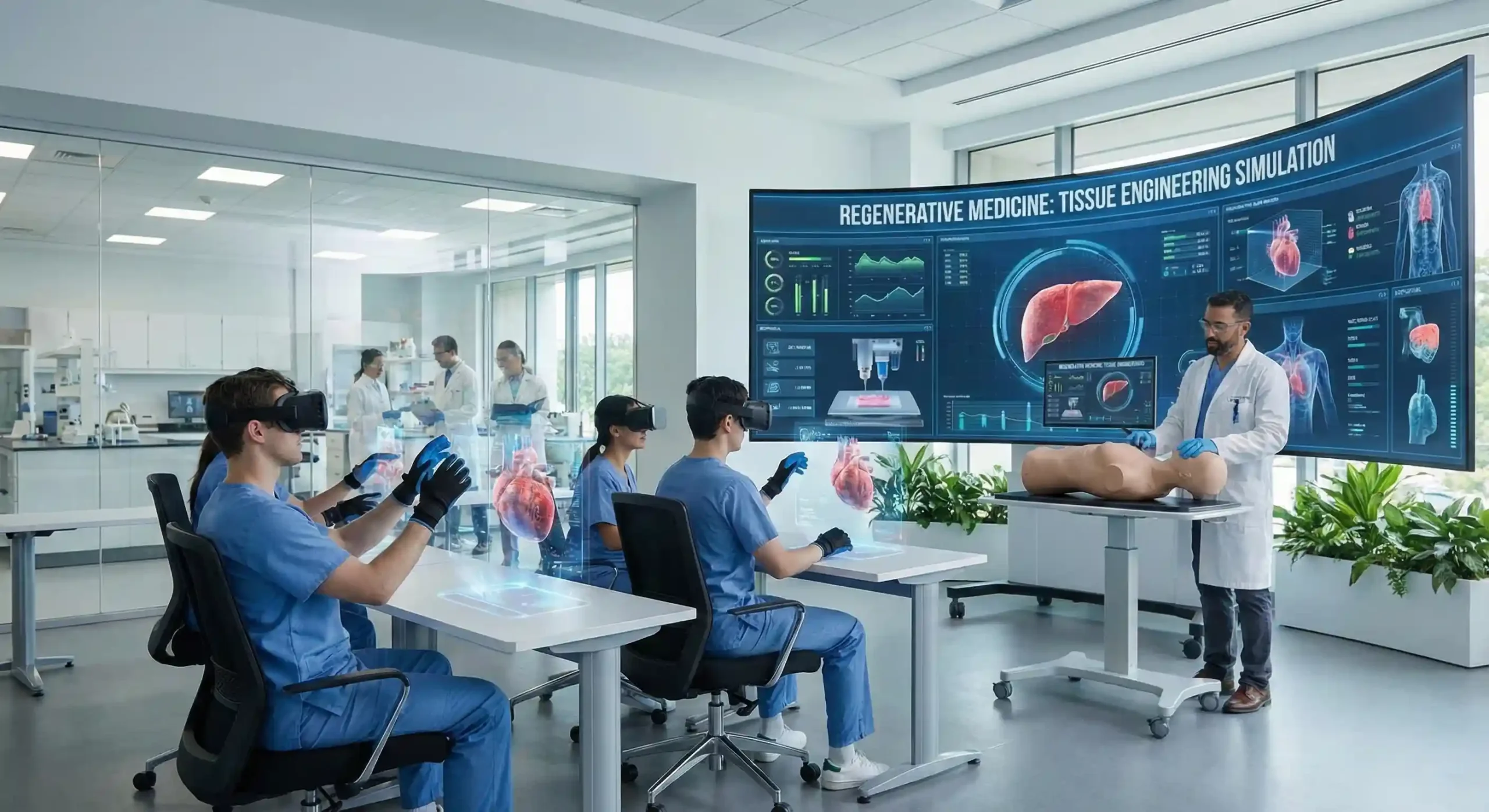
Simulation-based learning has become essential in regenerative medicine education. Virtual reality and augmented reality allow learners to practice complex procedures in a risk-free environment. As a result, confidence and technical proficiency improve.
In addition, simulated case scenarios expose learners to real-world challenges. This method supports skill development while reinforcing clinical decision-making.
Supporting Resource:
Medical Simulation Technology – https://www.aamc.org/
Technology also improves access to regenerative medicine research. Digital databases and cloud-based tools enable learners to review clinical studies efficiently. Therefore, evidence-based education becomes more accessible and practical.
Moreover, integrated data systems support collaboration between researchers and clinicians. This synergy strengthens the educational foundation of regenerative medicine.
Supporting Resource:
Biomedical Research Databases – https://pubmed.ncbi.nlm.nih.gov/
The future of technology in regenerative medicine education is driven by innovation and adaptability. Emerging tools such as machine learning, immersive training environments, and real-time data analysis will further enhance learning outcomes.
As technology continues to advance, education will remain aligned with clinical excellence. Consequently, healthcare professionals will be better prepared to deliver regenerative therapies safely and effectively.