Sports injuries can significantly impact athletic performance, training schedules, and overall quality of life. As athletes and healthcare professionals seek innovative treatment options, PRP in Sports Injury Recovery has emerged as one of the most promising applications of regenerative medicine.
Platelet-Rich Plasma (PRP) therapy harnesses the body’s natural healing mechanisms by concentrating platelets and growth factors from the patient’s own blood. Consequently, this minimally invasive treatment has become increasingly popular among sports medicine practitioners, orthopedic specialists, and regenerative medicine providers.
At the forefront of regenerative medicine education, IARM Training Services provides healthcare professionals with comprehensive training in PRP therapies and advanced biologic treatments.
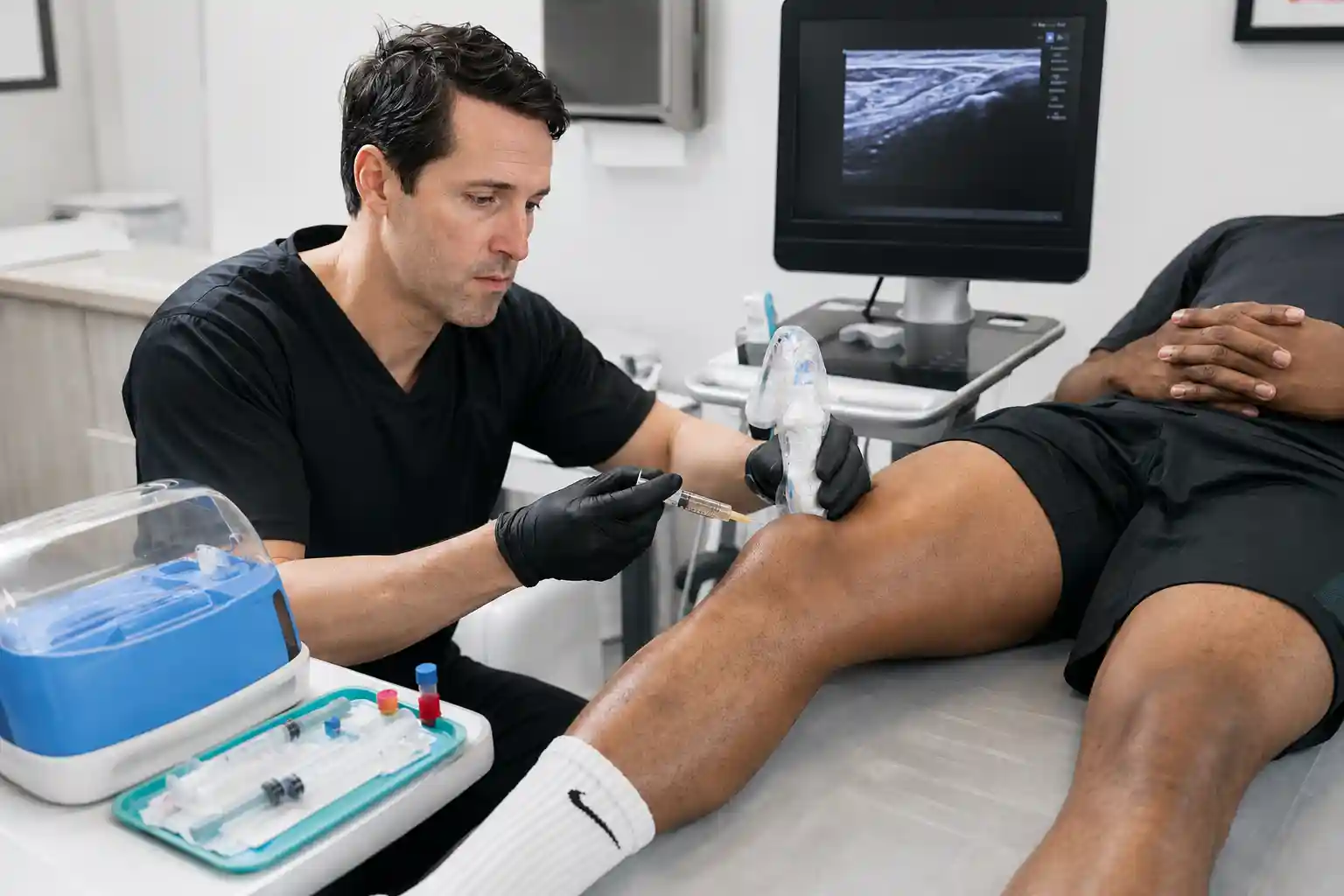
PRP therapy involves collecting a small sample of a patient’s blood, processing it through centrifugation, and isolating a concentrated platelet-rich layer. These platelets contain essential growth factors that help stimulate tissue repair and regeneration.
When injected into an injured area, PRP may support:
As a result, PRP in sports injury recovery has become a valuable tool in modern regenerative medicine practices.
The effectiveness of PRP is largely attributed to its concentration of bioactive growth factors, including:
These biological mediators help coordinate the body’s natural healing response. Furthermore, they encourage tissue regeneration rather than merely masking symptoms.
Because regenerative medicine focuses on restoring damaged tissues, PRP aligns closely with the principles of functional recovery and long-term healing.
Tendon injuries are among the most common reasons athletes seek PRP therapy. Conditions frequently treated include:
PRP may help improve tendon healing by stimulating collagen synthesis and supporting tissue remodeling.
Ligaments often heal slowly due to limited blood supply. Therefore, PRP has gained attention as a supportive treatment option for:
Muscle injuries can significantly affect athletic performance. PRP may assist recovery from:
Athletes often pursue regenerative medicine approaches to accelerate their return-to-play timelines while supporting tissue quality.
PRP is also commonly used in sports medicine for joint conditions such as:
Unlike surgical interventions, PRP injections can often be performed in an outpatient setting. Consequently, patients experience minimal disruption to daily activities.
Because PRP is derived from the patient’s own blood, the risk of allergic reactions or immune rejection is significantly reduced.
While individual results vary, many athletes seek PRP as part of a comprehensive rehabilitation strategy aimed at optimizing recovery.
PRP works best when integrated with:
Therefore, practitioners often combine regenerative medicine interventions with evidence-based rehabilitation programs.
Elite and recreational athletes alike are increasingly exploring regenerative medicine solutions. Rather than focusing solely on symptom management, these treatments aim to support biological healing processes.
Several professional sports organizations and sports medicine clinics now incorporate PRP into their treatment pathways for selected injuries. As research continues to evolve, regenerative medicine is expected to play an even larger role in athlete care.
For additional information on sports medicine research and education, healthcare professionals may explore resources from the American Medical Society for Sports Medicine (AMSSM) and the American Academy of Orthopaedic Surgeons (AAOS).
Successful outcomes with PRP in sports injury recovery depend on appropriate patient selection. Factors to consider include:
Healthcare providers should conduct thorough assessments before recommending PRP treatments.
Related learning resources are available through IARM’s Regenerative Medicine Training Programs, where clinicians can gain hands-on experience with PRP preparation and injection techniques.
As demand for regenerative medicine grows, proper training becomes increasingly important. Clinicians must understand:
Comprehensive education helps ensure safe and effective implementation of PRP therapies in sports medicine settings.
Organizations such as IARM Training Services offer specialized courses designed to equip healthcare professionals with practical regenerative medicine skills and evidence-based knowledge.
Research continues to refine our understanding of PRP applications in sports medicine. Current areas of interest include:
As scientific evidence expands, healthcare providers will be better positioned to optimize treatment outcomes for athletes across multiple sports disciplines.
PRP in Sports Injury Recovery represents an exciting advancement within regenerative medicine. By utilizing the body’s own healing components, PRP offers healthcare professionals a biologically focused approach to managing tendon, ligament, muscle, and joint injuries.
When combined with proper patient selection, rehabilitation, and clinical expertise, PRP can become an important component of comprehensive sports medicine care. As regenerative medicine continues to evolve, clinicians trained in these advanced therapies will be well-positioned to meet the growing demand for innovative, patient-centered treatment options.