Regenerative medicine continues to redefine modern healthcare. However, clinical success depends heavily on how well practitioners are trained. At IARM Training Services, programs are intentionally structured to translate regenerative medicine science into measurable clinical outcomes. This article explores how IARM training programs are designed to deliver real-world clinical impact while maintaining compliance, safety, and evidence-based practice.
IARM regenerative medicine training programs are built with one clear goal: improving patient outcomes. Rather than focusing solely on theory, the curriculum emphasizes practical application in real clinical environments.
Each training pathway aligns scientific foundations with procedural execution. As a result, clinicians gain the confidence to implement regenerative medicine safely and effectively.
To explore current training pathways, visit the official IARM website:
IARM Courses – https://iarm-usa.com/courses/
A modular approach ensures structured learning without overwhelming participants. Each module builds upon the previous one, reinforcing retention and clinical relevance.
Foundations of regenerative medicine science
Patient evaluation and selection criteria
Treatment protocols and clinical workflows
Risk management and safety standards
This progression allows learners to develop competence step by step. Consequently, knowledge gaps are minimized while clinical readiness is maximized.
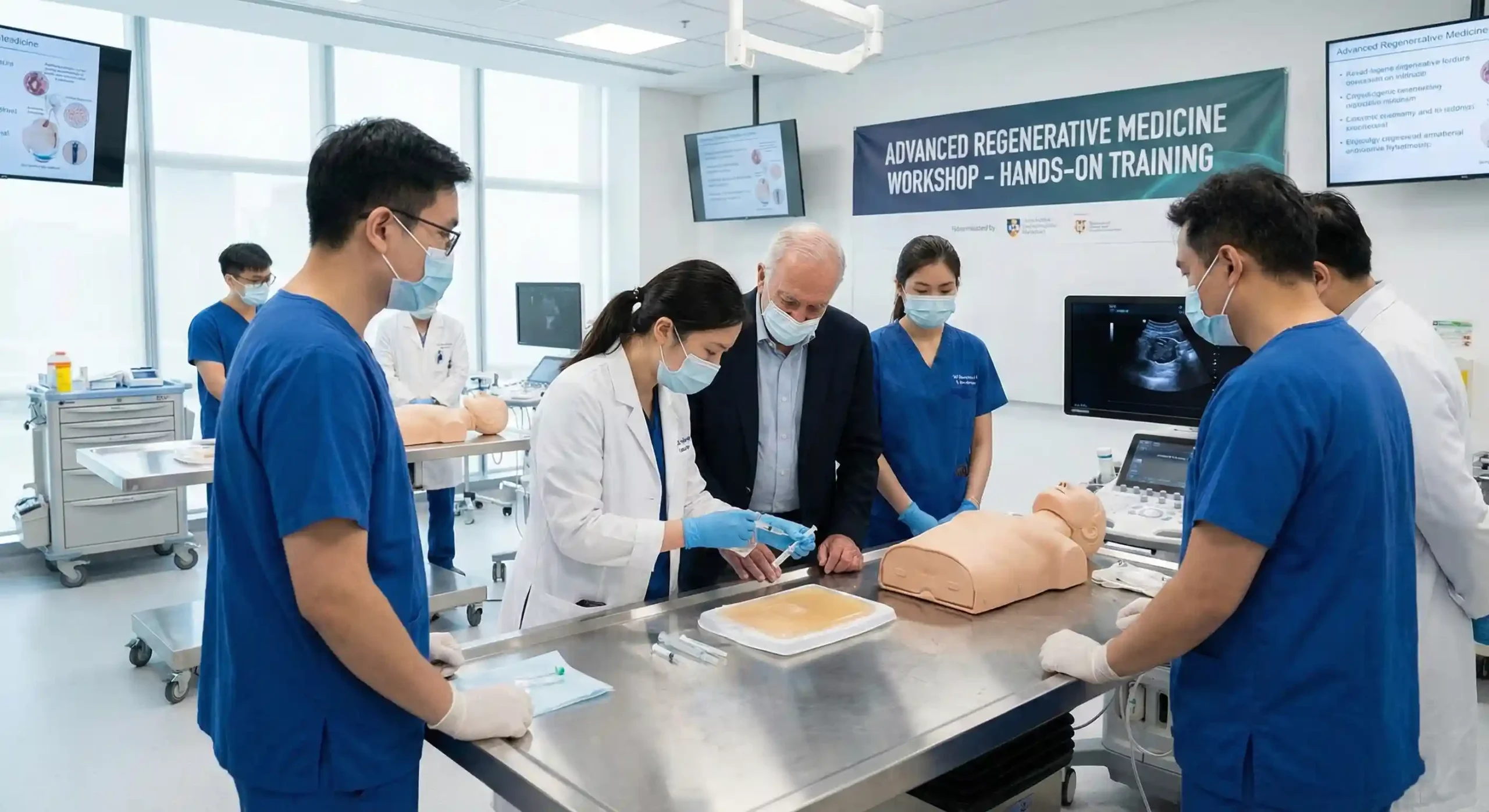
Clinical impact is strengthened through experiential learning. IARM regenerative medicine training programs integrate hands-on workshops that simulate real patient scenarios.
During training, participants:
Practice regenerative medicine procedures under expert supervision
Learn injection techniques and anatomical targeting
Apply protocols within controlled clinical settings
Hands-on exposure ensures that skills transfer seamlessly into daily practice.
All course content is grounded in current scientific literature. Research-backed methodologies reinforce credibility and patient safety.
For external validation, explore this authoritative resource:
NIH – Regenerative Medicine Overview
https://www.nih.gov/news-events/nih-research-matters/regenerative-medicine
By aligning education with peer-reviewed research, IARM supports responsible adoption of regenerative medicine therapies.
Regenerative medicine operates in a complex regulatory environment. IARM training programs integrate compliance education to help clinicians operate within legal and ethical boundaries.
Topics include:
Regulatory considerations and best practices
Documentation standards
Ethical patient communication
This structured compliance focus protects both patients and practitioners.
Clinical impact increases when regenerative medicine is integrated across specialties. IARM programs address this by tailoring education for physicians, nurse practitioners, and allied healthcare professionals.
A multidisciplinary framework improves collaboration and treatment consistency. As a result, regenerative medicine becomes a scalable and sustainable clinical service.
Learning does not end after course completion. IARM supports ongoing education to ensure clinicians remain aligned with advancements in regenerative medicine.
Continued access to updates and educational resources reinforces long-term clinical success. Learn more about continuing education options at: https://iarm-usa.com/