
Hormonal balance plays a foundational role in human longevity. As patients increasingly seek solutions that address aging at its root, regenerative medicine has emerged as a powerful clinical framework for restoring hormonal health and optimizing long-term outcomes. For clinicians, understanding how hormones influence aging, disease prevention, and tissue repair is no longer optional—it is essential.
This article outlines what healthcare professionals need to know about hormonal health, longevity science, and how regenerative medicine principles elevate patient care.
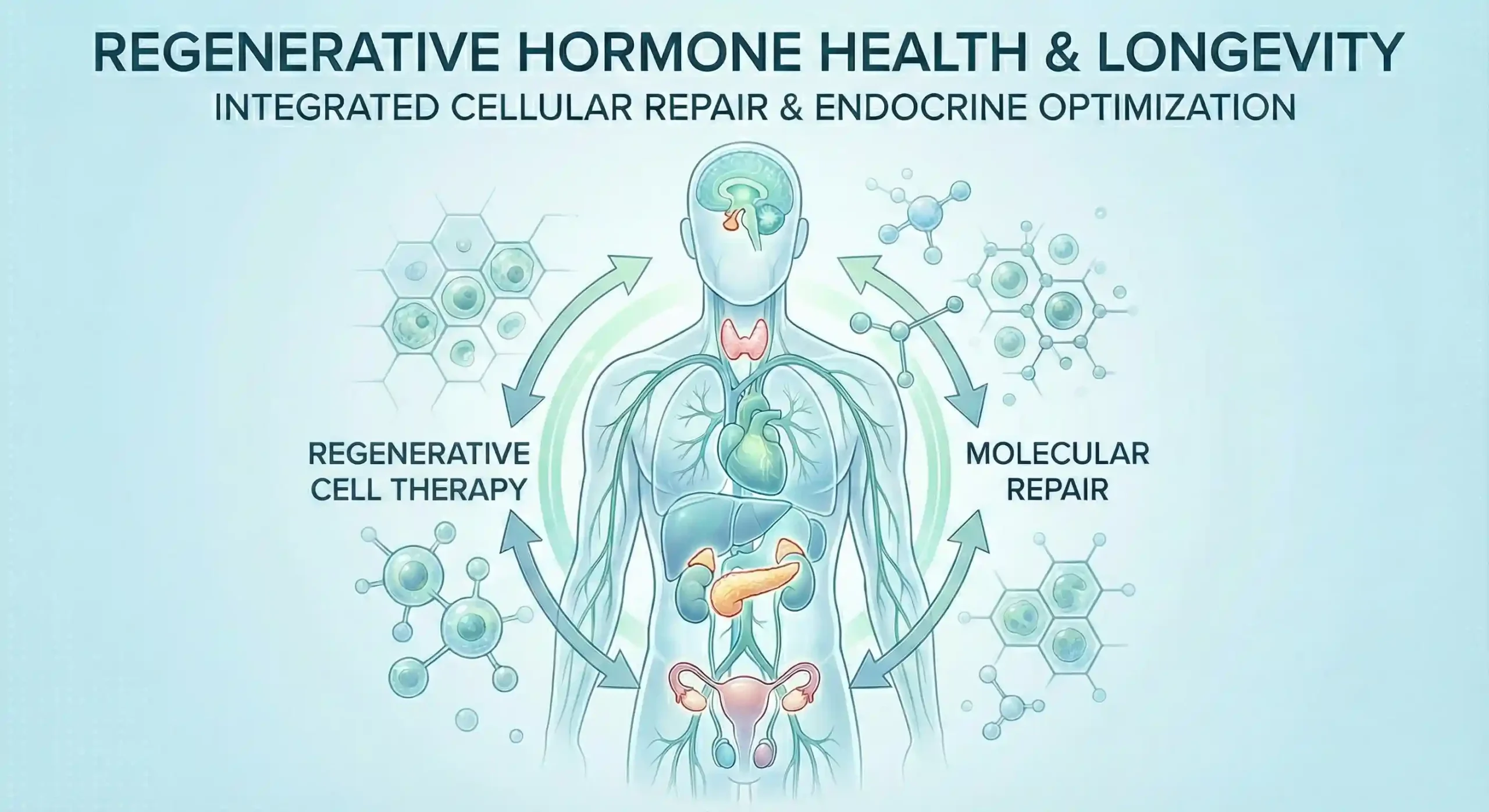
Hormones regulate nearly every physiological system, including metabolism, immune response, cognition, and tissue repair. As patients age, hormone production declines gradually, often leading to fatigue, sarcopenia, insulin resistance, cognitive changes, and reduced resilience.
In regenerative medicine, hormonal optimization is approached proactively rather than reactively. Instead of treating symptoms alone, clinicians focus on restoring biological balance to support healthy aging.
Importantly, hormone decline is not merely age-related—it is influenced by inflammation, stress, environmental toxins, and metabolic dysfunction. Addressing these factors supports both longevity and disease prevention.
Sex hormones influence muscle mass, bone density, cardiovascular health, and neuroprotection. When optimized appropriately, they support vitality and reduce age-related decline.
In regenerative medicine protocols, bioidentical hormone replacement is often used to mimic physiological levels while minimizing risks.
Growth hormone supports cellular repair, tissue regeneration, and fat metabolism. Declining levels are associated with increased frailty and slower recovery.
Clinicians using regenerative medicine strategies often support growth hormone pathways through peptide therapy, lifestyle interventions, and metabolic optimization.
Thyroid dysfunction frequently goes undiagnosed yet significantly impacts longevity. Subclinical hypothyroidism can impair energy production, cognition, and cardiovascular function.
A regenerative medicine approach emphasizes comprehensive thyroid evaluation rather than relying solely on TSH.
Chronic cortisol dysregulation accelerates aging through inflammation and immune suppression. Clinicians should assess adrenal health alongside sex hormones to ensure balanced longevity protocols.
Unlike conventional care, regenerative medicine integrates hormonal therapy with cellular and metabolic support. This includes:
Precision diagnostics and lab-guided dosing
Bioidentical hormone replacement therapy (BHRT)
Peptide and stem-cell–supportive therapies
Lifestyle-based interventions that enhance endocrine signaling
Clinics that integrate these strategies often report improved patient satisfaction, functional outcomes, and long-term adherence.
Organizations such as IARM emphasize clinician education in hormone optimization as a cornerstone of regenerative medicine practice. Educational resources and clinical guidance are available through platforms like the official IARM website: https://iarm-usa.com/
Balanced hormones contribute to measurable improvements in:
Cardiovascular health
Cognitive function and memory
Lean muscle mass and bone density
Immune system resilience
Metabolic efficiency
According to research summarized by Mayo Clinic, hormone regulation is closely linked to aging-related disease prevention and overall health span.
🔗 External Reference: https://www.mayoclinic.org/healthy-lifestyle
For clinicians adopting regenerative medicine models, hormonal health should be assessed early and monitored continuously. Best practices include:
Individualized treatment plans
Avoidance of supraphysiologic dosing
Regular biomarker reassessment
Patient education and shared decision-making
This approach aligns with evidence-based regenerative medicine while maintaining high safety standards.