Platelet-Rich Plasma (PRP) has become one of the most widely used biologic therapies in regenerative medicine. As healthcare providers seek evidence-based alternatives to conventional treatments, PRP continues to gain attention across orthopedics, sports medicine, pain management, and aesthetics.
One of the most effective ways to understand PRP applications is through real-world clinical scenarios. Clinical case examples from PRP training help practitioners connect theory with practice while developing confidence in patient assessment, preparation protocols, and injection techniques.
In this article, we explore several educational case examples commonly discussed during regenerative medicine training programs.
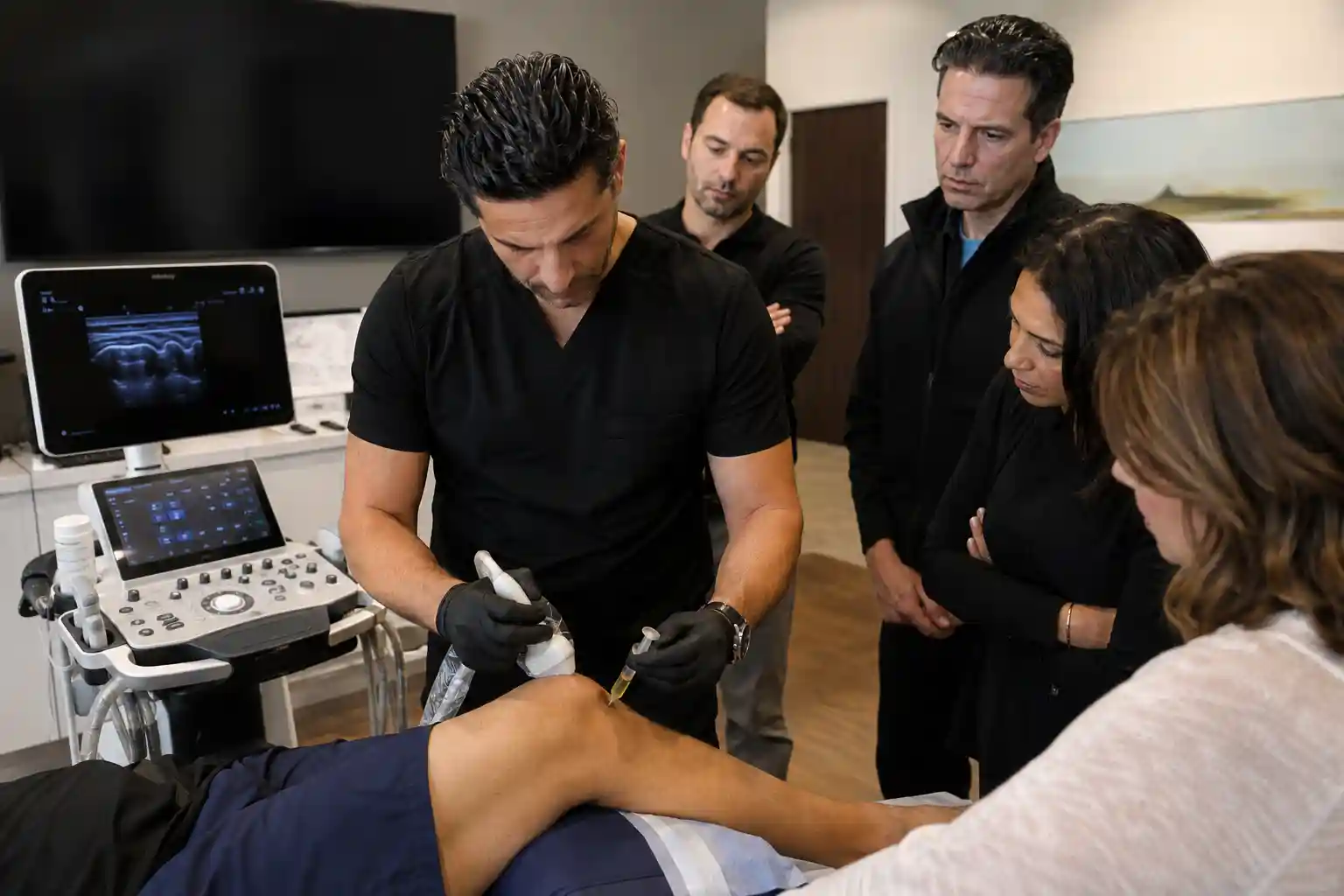
PRP education extends beyond understanding growth factors and centrifugation protocols. Practitioners must also learn how to evaluate patients, determine treatment suitability, and develop individualized care plans.
Clinical case examples from PRP training provide valuable insights into:
By reviewing diverse patient presentations, clinicians develop stronger decision-making skills that translate into better patient care.
For comprehensive PRP education, healthcare professionals often pursue specialized training through the International Academy of Regenerative Medicine (IARM).
A 62-year-old patient presents with chronic knee pain that has progressively worsened over three years. The patient reports:
During PRP training, practitioners learn to conduct:
Radiographic findings reveal mild-to-moderate osteoarthritis without severe joint deformity.
The clinical discussion focuses on:
Participants learn how PRP may be incorporated into a broader regenerative medicine treatment strategy while maintaining realistic patient expectations.
A 45-year-old recreational tennis player experiences persistent elbow pain for eight months despite:
The patient reports difficulty gripping objects and reduced sports participation.
During training, clinicians evaluate:
This case emphasizes:
Participants gain experience identifying patients who may benefit from biologic interventions when conservative measures have failed.
A 52-year-old office worker presents with chronic shoulder pain that affects sleep and overhead activities.
Clinical findings include:
Instructors commonly review:
This scenario demonstrates how regenerative medicine practitioners integrate diagnostic findings with individualized treatment approaches.
A competitive athlete sustains a moderate hamstring strain during training.
Goals include:
Participants discuss:
This case highlights the importance of multidisciplinary collaboration between physicians, therapists, and athletic trainers.
A healthy 48-year-old patient seeks non-surgical options for skin rejuvenation and hair restoration.
PRP training often includes:
Participants learn how regenerative medicine principles extend beyond musculoskeletal conditions into aesthetic medicine.
Successful outcomes begin with thorough patient evaluation. Not every patient is an ideal candidate for PRP therapy, making proper assessment essential.
Each clinical case requires individualized consideration. Factors such as diagnosis, severity, treatment goals, and overall health influence protocol development.
Modern regenerative medicine training emphasizes ultrasound-guided procedures to enhance injection accuracy and procedural confidence.
PRP therapy should often be viewed as part of a comprehensive treatment plan rather than a standalone intervention.
Setting realistic expectations remains one of the most important skills practitioners develop during PRP training.
Clinical case examples from PRP training provide a bridge between scientific knowledge and clinical practice. Through case-based learning, healthcare providers gain practical insights into patient assessment, procedural planning, and post-treatment management.
Structured regenerative medicine education helps practitioners develop the confidence needed to implement PRP therapies safely and effectively while staying aligned with evolving clinical standards.
Healthcare professionals interested in advancing their skills can benefit from specialized regenerative medicine programs that combine didactic instruction with hands-on experience.