Advancing regenerative medicine through education is essential for shaping the future of healthcare. As new therapies emerge, clinicians must stay updated with the latest scientific knowledge and practical skills. Education bridges the gap between innovation and safe clinical application.
Through structured learning, practitioners gain confidence in delivering regenerative treatments. As a result, patient outcomes improve, and healthcare systems become more adaptive.
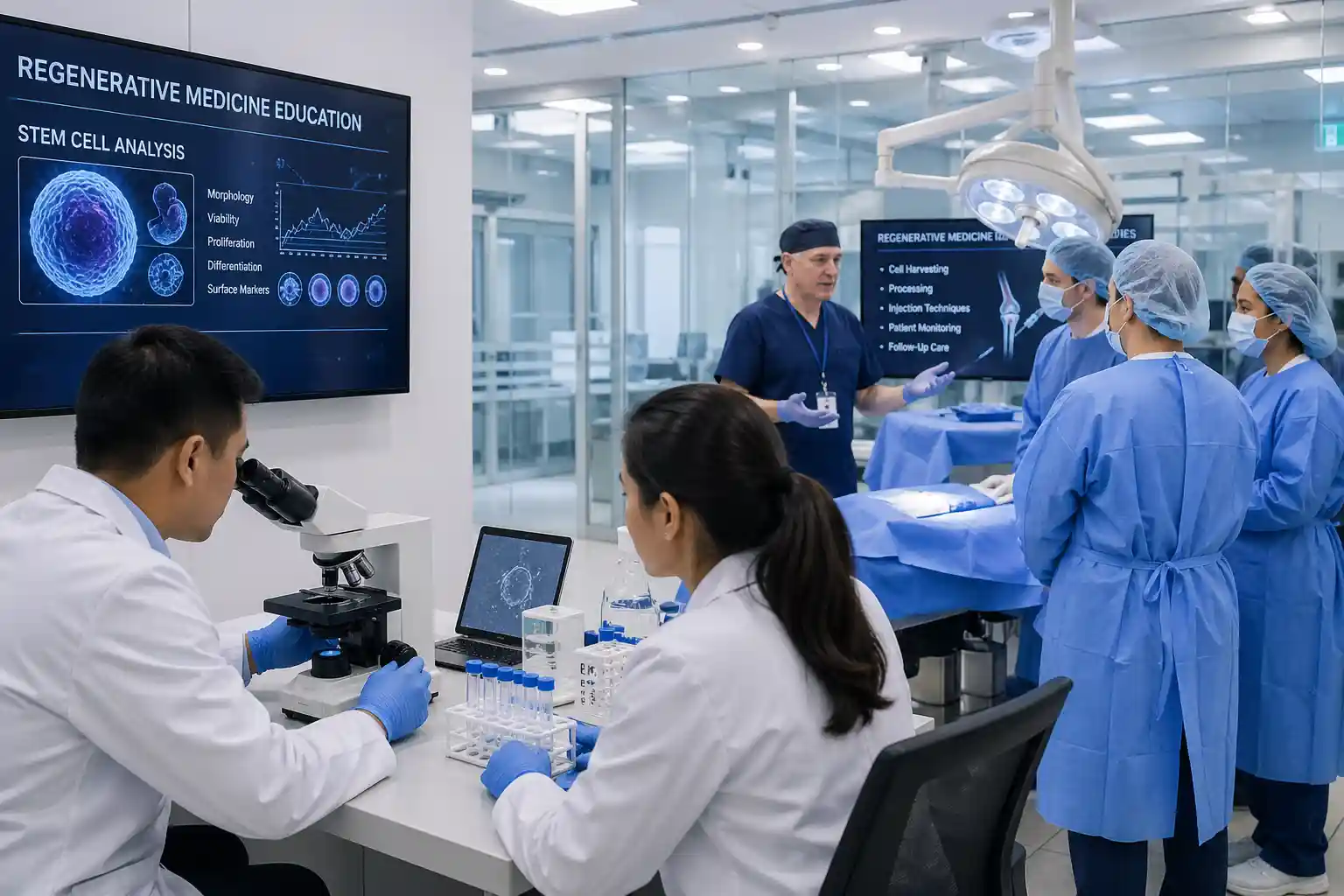
Education plays a central role in advancing regenerative medicine through education because it ensures that medical professionals apply therapies responsibly. Without proper training, even the most promising techniques may fail to deliver consistent results.
Moreover, education promotes standardized protocols. This consistency helps reduce risks and improves treatment success rates. In addition, ongoing learning allows clinicians to adapt to rapid advancements in the field.
High-quality training programs are crucial for advancing regenerative medicine through education. These programs provide both theoretical knowledge and hands-on experience.
For example, organizations like International Association of Regenerative Medicine offer structured courses designed for clinicians worldwide. These programs focus on:
You can explore more about these programs here:
Additionally, external resources such as:
provide valuable insights into global standards and research.
Continuous education supports clinicians in maintaining competence and confidence. Advancing regenerative medicine through education requires ongoing updates because the field evolves rapidly.
Key benefits include:
Furthermore, clinicians who engage in lifelong learning are more likely to adopt innovative therapies responsibly.
One of the biggest challenges in regenerative medicine is translating research into practice. Education helps bridge this gap effectively.
Structured learning environments allow clinicians to understand complex biological mechanisms. At the same time, they learn how to apply these concepts in real-world settings.
Consequently, advancing regenerative medicine through education becomes a practical and achievable goal rather than a theoretical concept.
The future of regenerative medicine depends heavily on education. As new technologies such as stem cell therapies and tissue engineering evolve, clinicians must be prepared.
Educational institutions and organizations will continue to play a vital role. They will ensure that practitioners remain informed and skilled.
Ultimately, advancing regenerative medicine through education will lead to safer treatments, better patient outcomes, and a more innovative healthcare system.
Advancing regenerative medicine through education is not optional—it is necessary. As the field continues to grow, clinicians must commit to continuous learning.
Through proper training and education, healthcare professionals can confidently adopt new therapies. This commitment will drive the future of medicine forward.