
Regenerative medicine continues to evolve as clinicians discover more effective ways to repair damaged tissues and improve healing. One of the most promising developments is combining PRP with other regenerative modalities to create synergistic treatment protocols. Rather than relying on a single therapy, physicians increasingly integrate Platelet-Rich Plasma (PRP) with stem cell therapies, exosomes, peptides, and biologics to maximize patient outcomes.
As research expands, combination therapies are becoming a key component of advanced regenerative medicine education and clinical practice.
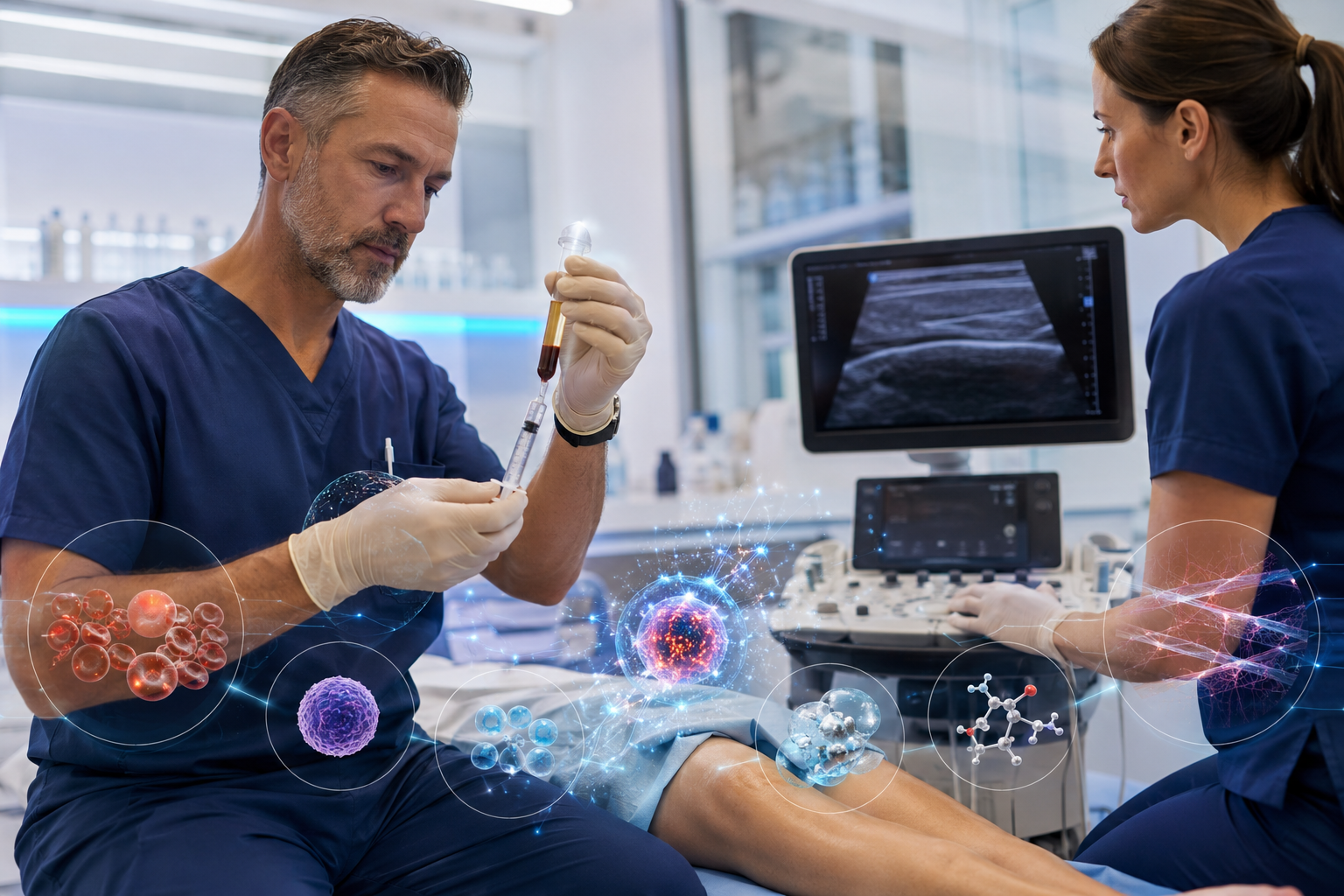
Platelet-Rich Plasma (PRP) is an autologous biologic treatment created by concentrating platelets from a patient’s own blood. These platelets release numerous growth factors that promote tissue repair, angiogenesis, collagen synthesis, and cellular regeneration.
Key growth factors include:
Because PRP utilizes the patient’s own biological material, it offers a favorable safety profile while supporting natural healing mechanisms.
Although PRP provides significant regenerative benefits, each biologic therapy addresses different aspects of tissue repair. Combining PRP with other regenerative modalities allows physicians to target multiple biological pathways simultaneously.
Potential benefits include:
These complementary effects have made combination protocols increasingly popular in regenerative medicine.
One of the most studied combinations pairs PRP with mesenchymal stem cells (MSCs).
PRP provides an environment rich in growth factors that supports stem cell survival, proliferation, and differentiation. Meanwhile, MSCs contribute regenerative signaling, immunomodulation, and tissue-building capabilities.
This combination has shown promise in treating:
The growth factors released by PRP help activate the regenerative potential of transplanted stem cells, creating a more supportive healing environment.
Exosomes have become an exciting advancement within regenerative medicine.
These extracellular vesicles contain:
When combining PRP with other regenerative modalities such as exosomes, clinicians may enhance cellular communication while stimulating repair at multiple biological levels.
Potential clinical advantages include:
Therapeutic peptides are increasingly incorporated into regenerative medicine protocols.
Depending on the selected peptide, benefits may include:
When paired with PRP, peptide therapy may support healing beyond the local injection site by influencing systemic regenerative pathways.
Many advanced physicians now evaluate peptide protocols as part of comprehensive regenerative treatment plans.
Orthopedic specialists frequently combine PRP with hyaluronic acid (HA), particularly in patients with osteoarthritis.
While PRP stimulates biological healing, hyaluronic acid contributes:
Together, these therapies may provide both mechanical and biological support for degenerative joint conditions.
Modern orthobiologic protocols often integrate multiple regenerative technologies rather than relying on isolated interventions.
Examples include:
Patient-specific treatment planning remains essential, as protocols should consider diagnosis, injury severity, patient health status, and treatment goals.
Successful outcomes depend not only on the therapies used but also on appropriate patient selection.
Important considerations include:
Proper evaluation helps determine whether combination regenerative therapies are appropriate for each individual.
Clinical research evaluating regenerative medicine combinations continues to expand across multiple specialties, including orthopedics, sports medicine, pain management, aesthetics, and wound care.
Although ongoing studies are refining optimal treatment protocols, current evidence suggests that carefully selected combination therapies may provide improved clinical outcomes compared with individual regenerative interventions in certain indications.
As scientific understanding evolves, physicians should remain current with emerging literature and evidence-based clinical guidelines.
As regenerative medicine becomes more sophisticated, clinicians require comprehensive education that extends beyond basic PRP preparation.
Advanced training should include:
Comprehensive education enables practitioners to integrate biologic therapies responsibly while maintaining high standards of patient care.
Combining PRP with other regenerative modalities represents one of the most exciting advances in modern regenerative medicine. By integrating biologic therapies such as stem cells, exosomes, peptides, and hyaluronic acid, physicians can develop personalized treatment strategies that address multiple aspects of tissue repair and healing.
As research continues to advance, clinicians who pursue specialized education will be better prepared to implement evidence-informed regenerative protocols safely and effectively. Through comprehensive training and a commitment to continuous learning, healthcare professionals can help shape the future of regenerative medicine while improving patient outcomes.