Platelet-Rich Plasma (PRP) therapy continues to transform regenerative medicine by offering minimally invasive treatment options for musculoskeletal injuries, aesthetic procedures, and chronic pain management. As demand for PRP treatments grows, healthcare professionals must receive structured, evidence-based education to deliver safe and effective patient outcomes.
At IARM Training Services, PRP training standards in regenerative medicine focus on clinical excellence, patient safety, and practical application. The program combines scientific knowledge with hands-on procedural training to prepare clinicians for real-world practice.
PRP therapy relies on precision. From patient assessment to blood processing and injection technique, every step influences treatment success. Without proper education, providers may face inconsistent outcomes and patient dissatisfaction.
High PRP training standards in regenerative medicine help clinicians:
IARM emphasizes standardized education to ensure providers can integrate PRP therapy into their practice responsibly and effectively.
The IARM curriculum covers both foundational science and advanced clinical application. Participants receive detailed instruction that supports long-term success in regenerative medicine.
The program includes:
This structured approach allows clinicians to understand not only how PRP works but also when and why to apply it.
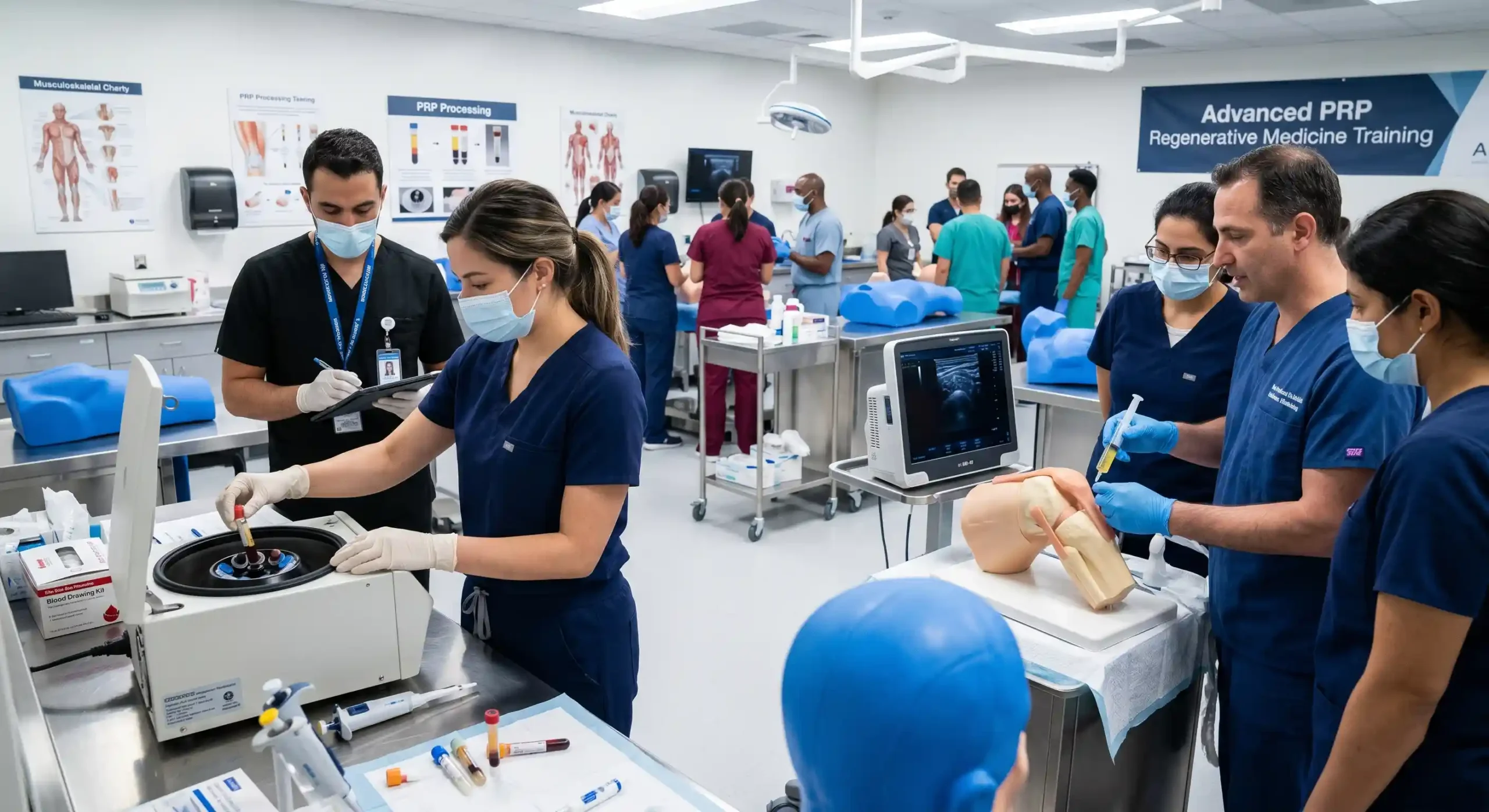
One of the defining strengths of IARM is its emphasis on practical experience. Many clinicians understand the theory behind PRP but lack confidence during actual procedures.
IARM addresses this gap through hands-on workshops and supervised clinical demonstrations. Participants gain experience with:
Hands-on learning improves retention and supports safer implementation in clinical practice.
Regenerative medicine continues to evolve rapidly. For that reason, PRP training standards in regenerative medicine must stay aligned with scientific research and clinical best practices.
IARM incorporates evidence-based instruction into every stage of training. Participants review current studies, treatment indications, and emerging regenerative medicine applications.
This evidence-driven model helps clinicians:
By staying current with medical literature, providers can build greater trust with patients and improve treatment consistency.
Patient safety remains a core component of regenerative medicine education. IARM emphasizes strict procedural standards and ethical practice throughout its PRP training programs.
Clinicians learn:
These protocols help reduce complications and support responsible regenerative medicine practice.
IARM welcomes healthcare professionals seeking advanced education in regenerative medicine. Training programs are designed for:
Whether participants are new to PRP therapy or expanding their regenerative medicine services, IARM provides structured education that supports clinical growth.
Many providers enter regenerative medicine because they want to offer innovative treatment solutions to patients. However, confidence develops through proper mentorship and hands-on instruction.
IARM helps clinicians build confidence by combining:
This approach helps providers transition PRP therapy into daily practice with greater accuracy and consistency.
As regenerative medicine expands globally, standardized PRP education becomes increasingly important. Patients expect safe, ethical, and evidence-based treatment from trained professionals.
IARM continues to support the advancement of regenerative medicine through comprehensive education programs that prioritize quality training and clinical excellence.
Clinicians who invest in advanced PRP education position themselves to deliver better patient outcomes while remaining competitive in modern healthcare.
PRP therapy plays a growing role in regenerative medicine, but successful outcomes depend heavily on provider training and procedural standards. IARM Training Services helps clinicians develop the knowledge, technical skills, and confidence required to perform PRP procedures safely and effectively.
Through evidence-based education, hands-on workshops, and patient-centered instruction, IARM continues to elevate PRP training standards in regenerative medicine.