
Platelet-rich plasma, commonly called PRP, has become one of the most discussed biologic treatments in modern regenerative medicine. As clinicians continue to seek minimally invasive solutions for tissue repair, PRP in regenerative medicine has gained significant clinical attention.
PRP uses components from the patient’s own blood to support healing, reduce inflammation, and potentially improve tissue regeneration. Its application now spans orthopedics, sports medicine, aesthetics, wound healing, and musculoskeletal medicine.
At IARM Training Services, healthcare professionals continue exploring evidence-based biologic therapies that shape the future of regenerative medicine.
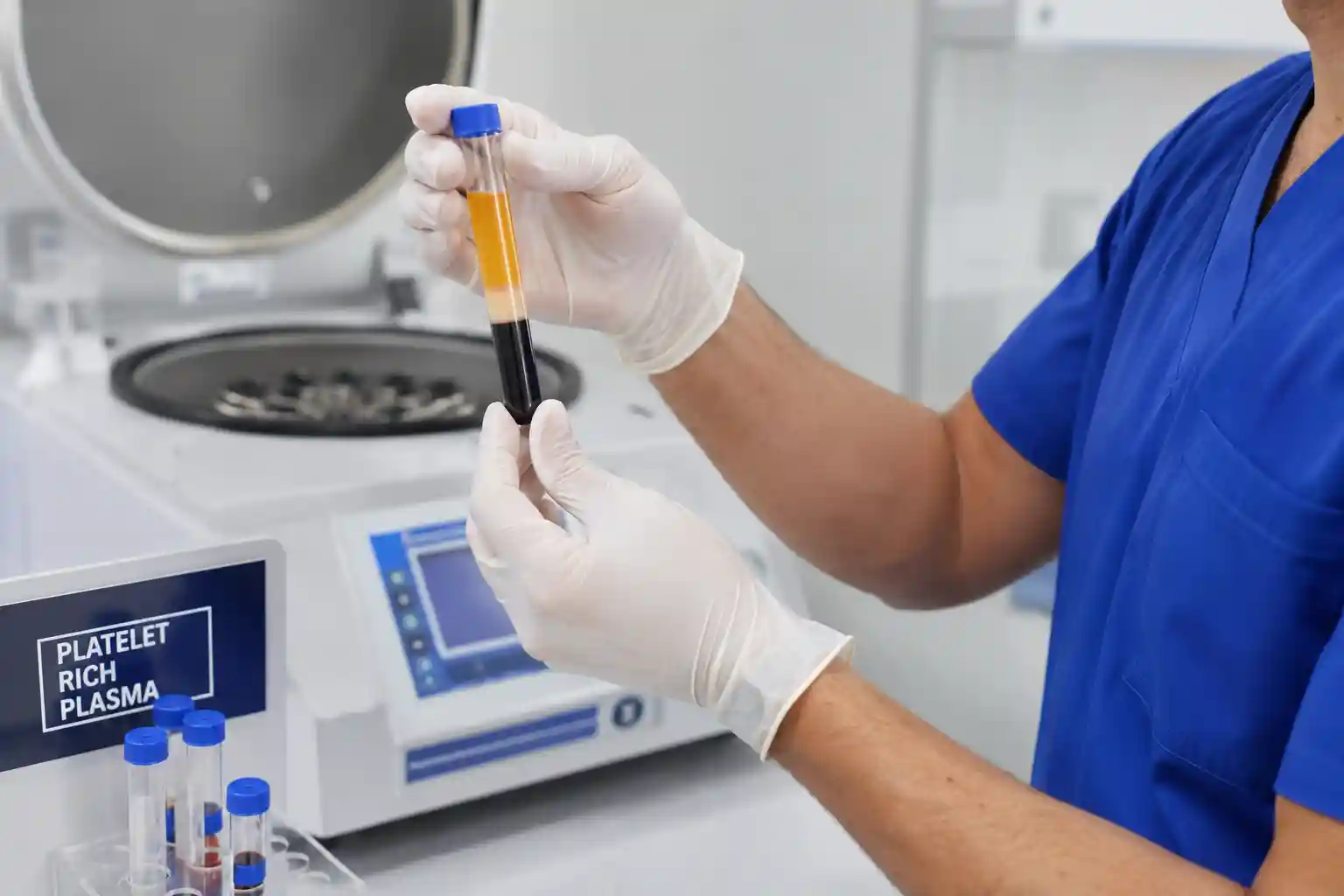
Platelet-rich plasma is a concentrated preparation of platelets suspended in plasma. Platelets are best known for their role in blood clotting, but they also contain growth factors and bioactive proteins involved in tissue healing.
These growth factors include:
When concentrated and delivered to injured tissue, these signaling molecules may help support cellular repair and healing responses. Studies continue to evaluate PRP’s effectiveness across different clinical applications.
The science of PRP begins with the body’s natural healing cascade. When tissue injury occurs, platelets migrate to the damaged area and release growth factors that activate repair mechanisms.
PRP in regenerative medicine aims to amplify this natural process by increasing platelet concentration beyond normal blood levels. According to orthopedic literature, PRP preparations may contain platelet concentrations several times higher than baseline blood levels.
Potential biologic effects include:
Although outcomes vary depending on tissue type and preparation methods, this biologic rationale supports continued clinical interest.
The preparation of PRP is a structured clinical process.
A small volume of the patient’s blood is drawn, similar to a standard blood test.
The blood sample is placed in a centrifuge. Spinning separates blood components based on density:
The platelet-rich layer is isolated for treatment.
The prepared PRP is injected into the target tissue under clinical guidance.
This preparation process is commonly described by the American Academy of Orthopaedic Surgeons in its PRP guidance.
PRP is widely used in orthopedic regenerative medicine for:
Evidence suggests PRP may improve pain and function in selected knee osteoarthritis cases, although outcomes vary by protocol and patient selection.
Athletes frequently use PRP to support recovery from:
PRP’s minimally invasive nature makes it attractive in sports recovery programs.
PRP in regenerative medicine also extends into aesthetic practice for:
Growth factors may stimulate collagen production and follicular activity.
Some surgeons use PRP as an adjunct during procedures to potentially support healing after tendon or soft tissue repair. Current evidence remains condition-specific.
Potential advantages include:
Because PRP uses the patient’s own biologic material, allergic reactions are uncommon compared with synthetic injectables.
Although PRP in regenerative medicine shows promise, limitations remain:
Professional societies continue to call for more standardized protocols and long-term evidence.
Patient selection, diagnosis, and clinical expertise remain essential.
PRP continues to evolve as regenerative medicine advances. Emerging research focuses on:
As biologic therapies become more refined, PRP may continue to play an important role in personalized regenerative treatment strategies.