Modern regenerative medicine continues to transform how clinicians approach healing, tissue repair, and functional recovery. Among the most powerful biological signaling molecules involved in this process are growth factors—proteins that regulate cell behavior, stimulate tissue repair, and coordinate healing at the molecular level.
In regenerative medicine, growth factors help activate the body’s natural repair systems. These proteins influence cell migration, proliferation, differentiation, and extracellular matrix formation, all of which are essential for effective healing.
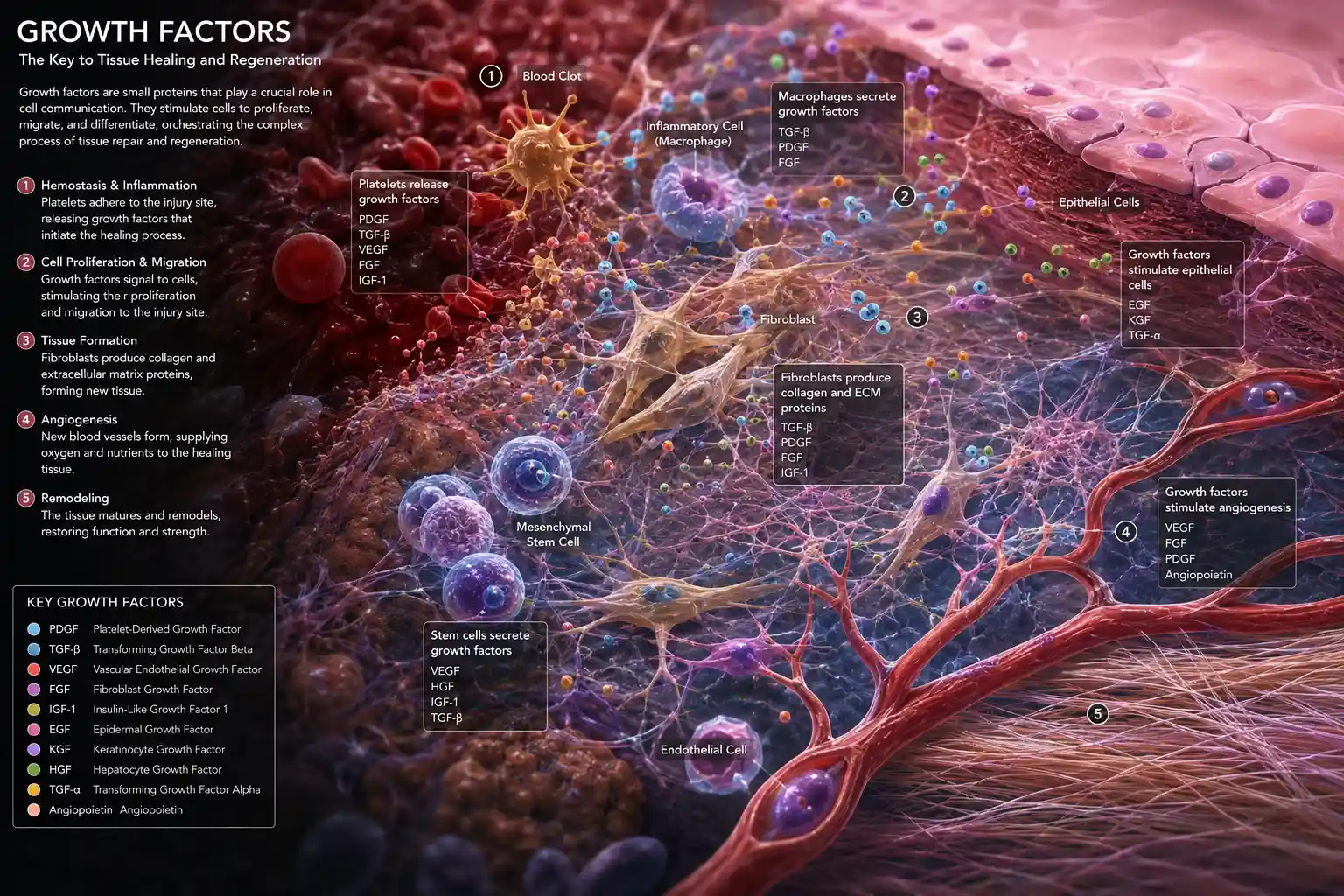
Growth factors are naturally occurring signaling proteins released by platelets, immune cells, stem cells, and damaged tissues. Their primary role is to communicate with nearby cells and trigger biological responses necessary for repair.
Within regenerative medicine growth factors are used to accelerate healing in tissues such as skin, muscle, tendon, bone, cartilage, and nerves.
Common sources include:
These molecules are often concentrated in therapies like platelet-rich plasma (PRP) and cellular regenerative treatments.
Healing typically occurs in overlapping phases: inflammation, proliferation, and remodeling. Growth factors influence each stage.
Immediately after injury, platelets release signaling molecules that recruit immune cells and prepare the damaged area for repair.
Key factors include:
PDGF and TGF-β are recognized as major regulators of early wound repair.
During this phase, new tissue begins to form.
Important growth factors include:
VEGF, FGF, and EGF are all closely involved in cellular proliferation and vascular support during tissue regeneration.
Finally, growth factors help reorganize collagen and strengthen repaired tissue.
During this stage:
When growth factor signaling becomes dysregulated, chronic wounds or delayed healing may occur.
Growth factor-based therapies are increasingly used in:
These therapies may help patients reduce recovery time while supporting more functional tissue repair.
The major advantage of regenerative medicine growth factors lies in their ability to activate natural healing instead of simply masking symptoms.
Potential benefits include:
As regenerative technologies advance, growth factor delivery systems continue to become more targeted and effective.
Researchers are exploring:
These innovations may further improve healing outcomes in musculoskeletal injuries, chronic wounds, and degenerative conditions.
For more information about regenerative therapies and clinical education, visit IARM Training Institute at: IARM Training Services – https://iarm-usa.com/
National Library of Medicine – Growth Factors in Wound Healing
https://pubmed.ncbi.nlm.nih.gov/40444617/
NIH – Growth Factor Delivery for Tissue Regeneration
https://pubmed.ncbi.nlm.nih.gov/22500904/
MDPI – Advanced Growth Factor Delivery Systems
https://www.mdpi.com/1420-3049/22/8/1259