Stem cell therapies are transforming modern healthcare, especially within regenerative medicine. Two primary approaches—autologous and allogeneic stem cell therapies—play crucial roles in tissue repair, disease treatment, and clinical innovation. Understanding their differences is essential for clinicians and healthcare professionals pursuing advanced training.
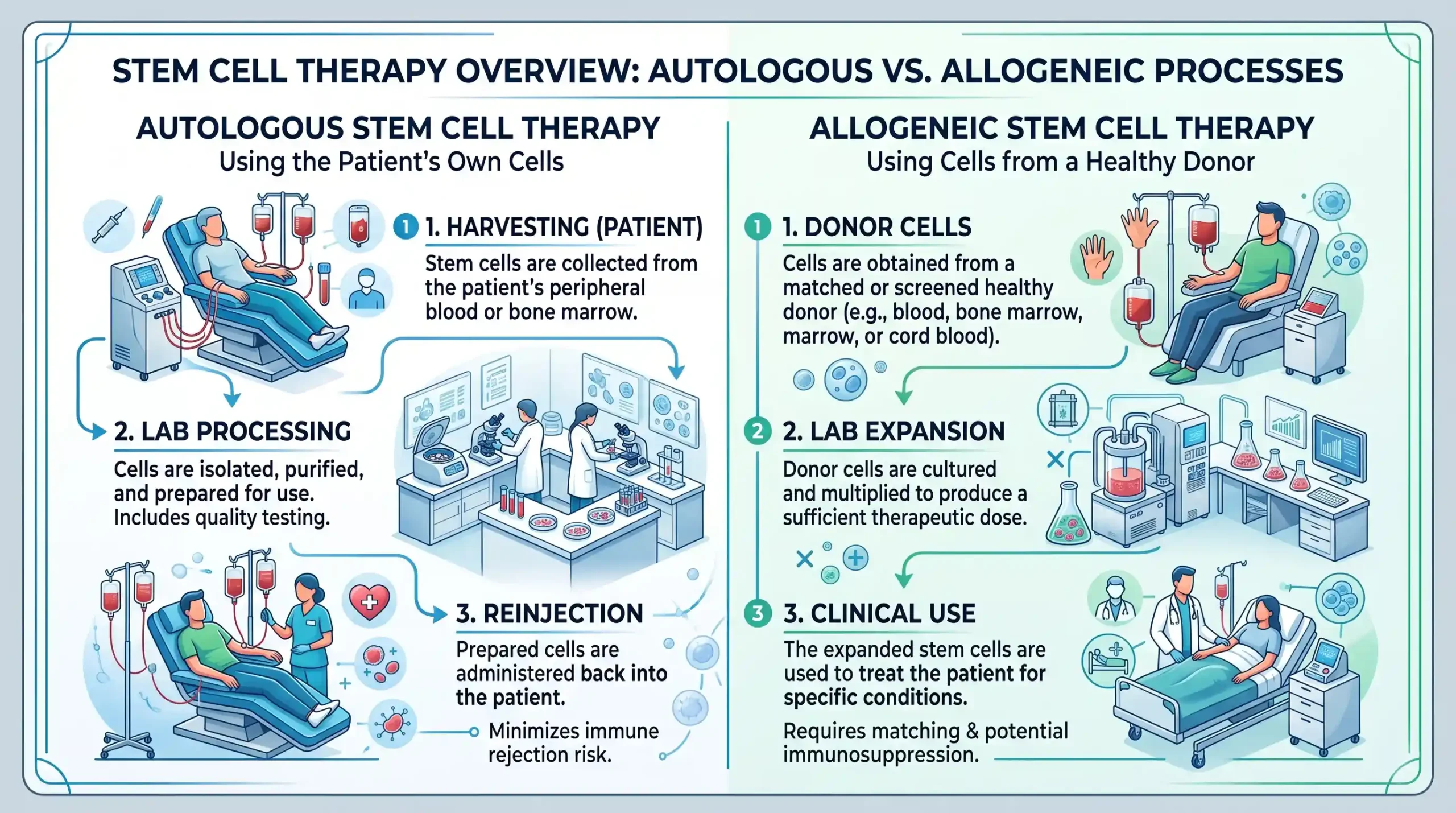
Stem cell therapies in regenerative medicine involve using specialized cells to repair, replace, or regenerate damaged tissues. These therapies are widely applied in orthopedics, cardiology, neurology, and aesthetic medicine.
There are two primary types:
Both approaches offer unique benefits and challenges, making them suitable for different clinical scenarios.
Autologous stem cell therapy uses the patient’s own cells, typically harvested from bone marrow or adipose tissue.
Allogeneic stem cell therapy uses stem cells derived from a donor, such as umbilical cord tissue, bone marrow, or placental sources.
| Feature | Autologous Therapy | Allogeneic Therapy |
|---|---|---|
| Cell Source | Patient’s own body | Donor (e.g., umbilical cord) |
| Immune Rejection Risk | None | Possible |
| Availability | Requires harvesting | Readily available |
| Cell Quality | Varies (age-dependent) | Typically high-quality |
| Cost | Procedure-based | Product-based |
| Regulatory Complexity | Lower | Higher |
These resources provide deeper insight into stem cell biology and clinical applications in regenerative medicine.
The decision between autologous and allogeneic stem cell therapies depends on:
In many cases, clinicians integrate both approaches to optimize patient outcomes.