Medical training is demanding, fast-paced, and continuously evolving. As clinical knowledge expands, especially in regenerative medicine, success increasingly depends on strong professional relationships. Networking and mentorship in medical training provide guidance, open doors to opportunities, and support lifelong learning. Moreover, they help clinicians navigate complex career decisions with confidence.
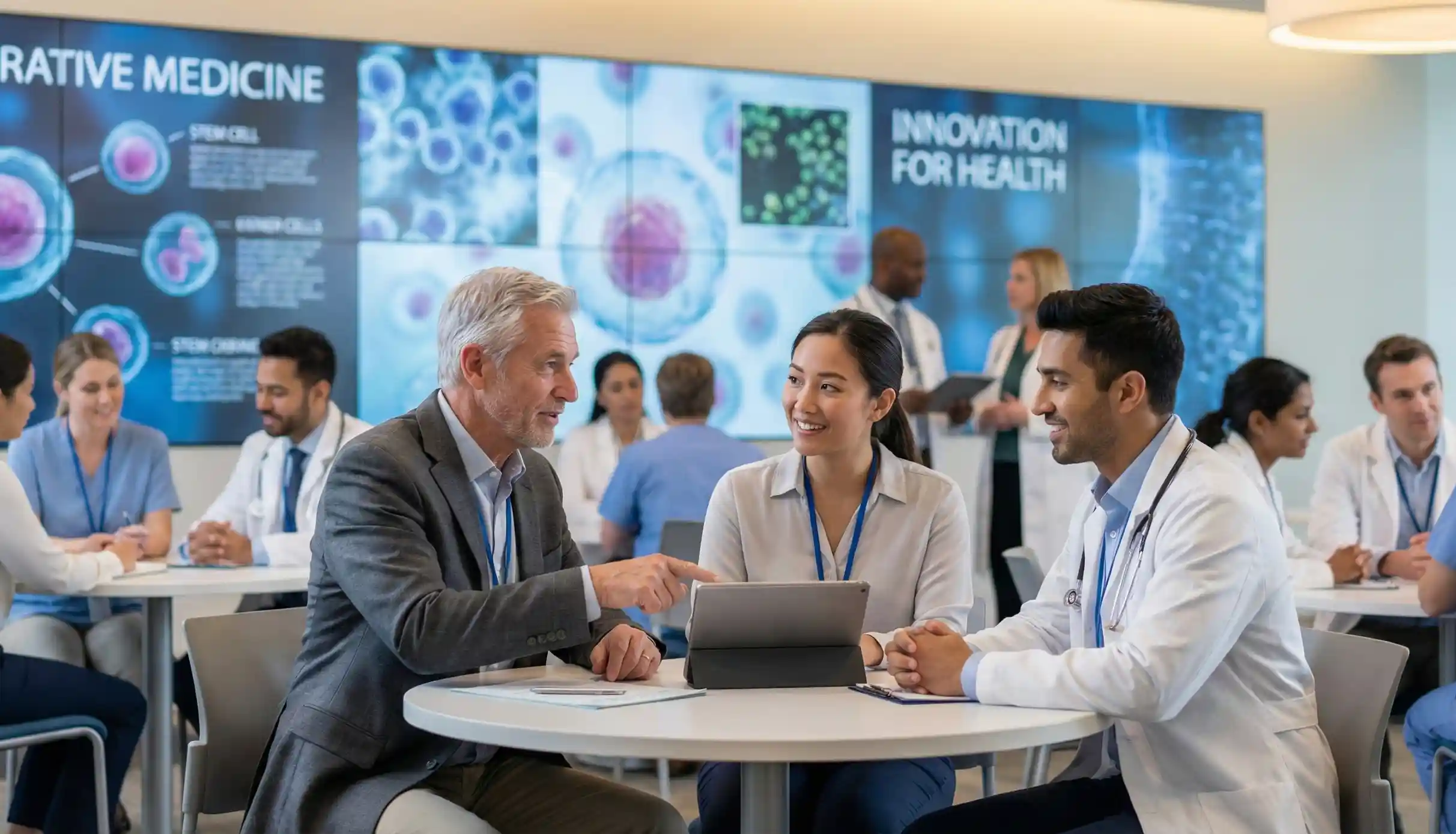
Networking is more than exchanging contact information. Instead, it builds professional ecosystems that support growth and innovation.
Through networking and mentorship in medical training, physicians often gain access to fellowships, research roles, and leadership positions. Additionally, professional connections frequently lead to collaborations that may not be publicly advertised.
Medicine advances rapidly. Therefore, networking allows trainees to learn from peers and experienced clinicians about emerging techniques in regenerative medicine. Conferences, workshops, and online forums further enhance this exchange of practical knowledge.
Mentorship provides structured guidance that complements formal education. While textbooks teach theory, mentors share real-world wisdom.
Mentors help trainees identify strengths, address weaknesses, and define long-term goals. As a result, career paths become clearer and more strategic, particularly in specialized fields like regenerative medicine.
Medical training can be overwhelming. However, mentorship fosters resilience by offering encouragement and perspective during challenging periods. This support improves confidence and overall well-being.
Regenerative medicine is highly collaborative and interdisciplinary. Consequently, strong professional networks are essential.
Clinicians engaged in regenerative medicine often collaborate with researchers, biotech companies, and academic institutions. Organizations such as the American Medical Association and the International Society for Stem Cell Research emphasize mentorship and networking through conferences and training programs.
Furthermore, internal educational resources and professional development initiatives from platforms like IARM Services support clinicians seeking structured mentorship in regenerative medicine.
Medical conferences and regenerative medicine symposiums provide valuable face-to-face networking opportunities.
Joining associations such as the American Medical Association helps trainees connect with mentors and peers nationwide. Visit https://www.ama-assn.org/ for membership and educational resources.
Online communities, webinars, and virtual mentorship programs make networking accessible regardless of location. Consequently, clinicians can maintain meaningful connections throughout their careers.
Strong networking and mentorship in medical training lead to better-informed clinicians. In turn, this improves patient outcomes, especially in innovative fields like regenerative medicine. Collaborative environments also accelerate research translation from bench to bedside.