
Regenerative medicine continues to redefine how clinicians approach healing and tissue restoration. Among its most promising innovations, exosomes have emerged as a powerful, cell-free therapeutic option. As research advances, exosomes are increasingly viewed as key biological messengers that may shape the future of regenerative therapy.
This article explores how exosomes work, why they matter, and how they are influencing the evolving landscape of regenerative medicine.
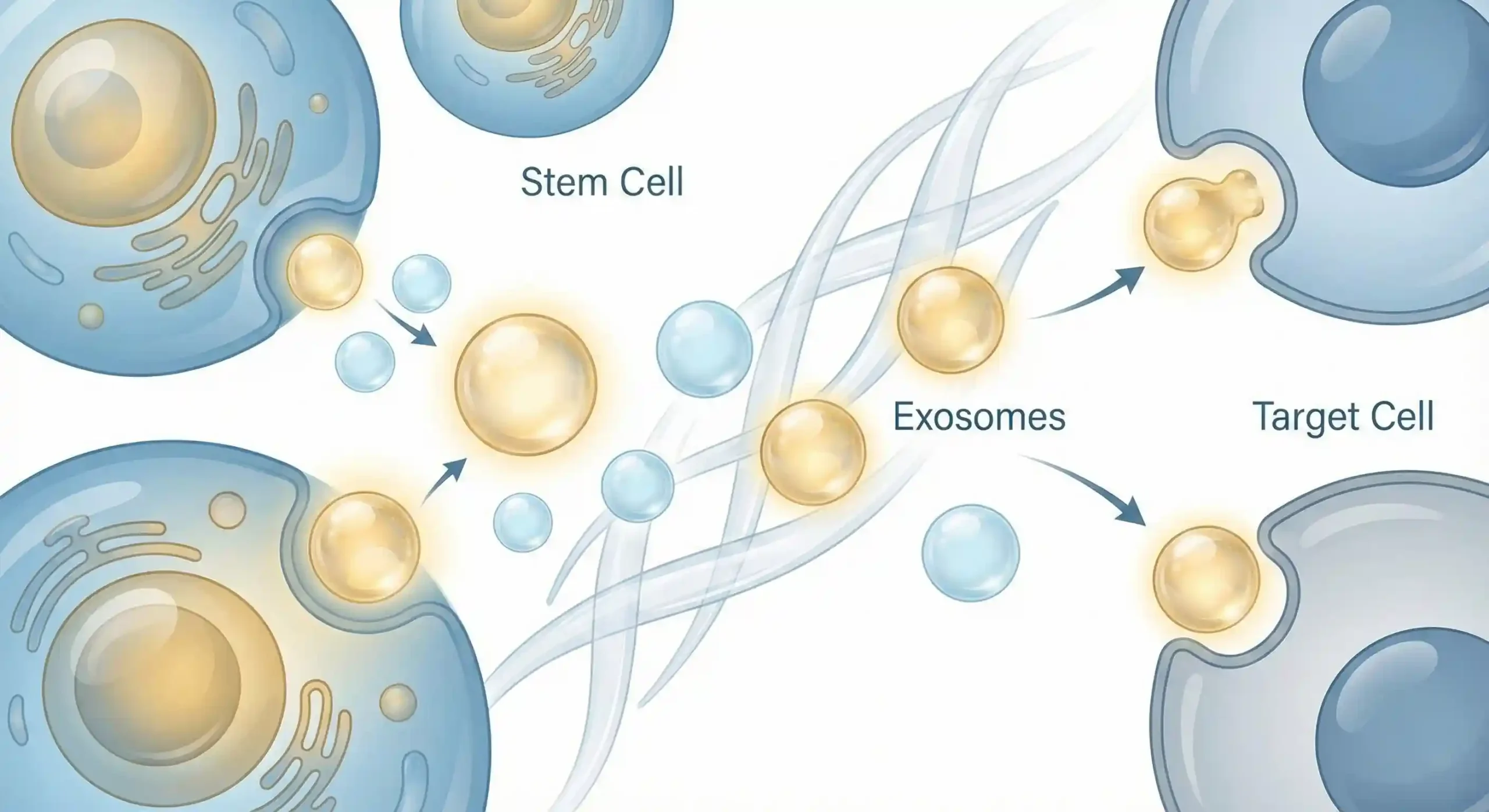
Exosomes are nano-sized extracellular vesicles released by cells. They carry proteins, lipids, and genetic material that influence how neighboring and distant cells behave. Instead of becoming new tissue themselves, exosomes guide the body’s repair processes through signaling.
Because of this mechanism, exosomes in regenerative medicine are being studied as a safer and more targeted alternative to cell-based therapies.
Regenerative medicine focuses on restoring function by activating the body’s natural repair systems. Exosomes support this goal in several important ways:
They promote cell communication essential for healing
They help regulate inflammation and immune response
They encourage angiogenesis and tissue remodeling
They reduce risks associated with live cell transplantation
As a result, exosomes in regenerative medicine are being integrated into advanced regenerative therapy protocols worldwide.
Exosomes are being explored for joint degeneration, tendon injuries, and cartilage repair. They may accelerate recovery while minimizing inflammation.
In skin rejuvenation and hair restoration, exosomes support collagen production and cellular turnover, improving overall tissue quality.
Research suggests that exosomes may cross biological barriers, making them valuable for neurological repair and systemic regenerative therapy applications.
Although both are central to regenerative medicine, exosomes offer unique advantages:
| Feature | Stem Cells | Exosomes |
|---|---|---|
| Living cells | Yes | No |
| Risk of immune reaction | Moderate | Low |
| Storage and handling | Complex | Stable |
| Mechanism | Differentiation + signaling | Signaling only |
Because of these differences, exosomes in regenerative medicine are often considered a refined evolution of regenerative therapy.
Multiple studies continue to validate the therapeutic potential of exosomes:
NIH – Extracellular Vesicles Research: https://www.nih.gov
Nature Reviews Molecular Cell Biology (Exosomes): https://www.nature.com
International Society for Extracellular Vesicles: https://www.isev.org
These sources support the expanding role of exosomes within evidence-based regenerative medicine.
As exosome therapy gains momentum, proper education and protocol development remain essential. Institutions like IARM Services provide structured training, certification, and compliance guidance to ensure responsible adoption of regenerative therapy.
Learn more about regenerative medicine education and clinical standards at:
👉 https://iarm-usa.com/
Despite their promise, exosomes in regenerative medicine still face challenges:
Standardization of sourcing and processing
Regulatory clarity across regions
Long-term safety and dosing optimization
Addressing these factors is critical for maintaining credibility and patient safety within regenerative therapy practices.
Exosomes represent a shift toward precision-based regenerative medicine. As research progresses, they may become a cornerstone therapy across multiple medical specialties. Their ability to harness the body’s own communication networks places them at the forefront of regenerative therapy innovation.